
Laser whitening in England is generally considered safe when carried out by a trained professional in a controlled manner. The treatment mainly works on surface stains, rather than affecting or altering the tooth’s strength or structure.
Many people think the laser could “burn” or damage the enamel, but that’s not what happens. It only helps the whitening gel work better on stains, while the tooth itself stays unchanged.
However, like any cosmetic treatment, it still needs to be done correctly. Overuse, poor technique, or unregulated products can increase the risk of sensitivity or irritation.
What Really Happens to Your Teeth During Laser Whitening?
A laser whitening session is simple and carefully managed. First, a protective gel is put on your gums to keep them safe and comfortable. Then, a whitening gel—often made with hydrogen peroxide or carbamide peroxide—is gently applied to your teeth.
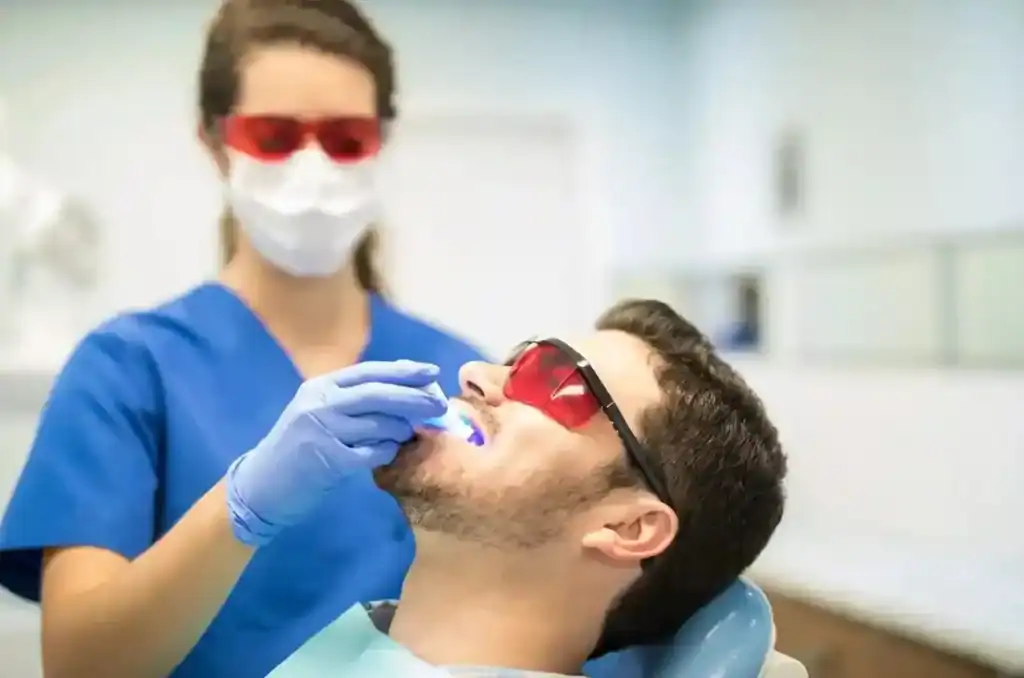
After that, the laser light is gently directed onto the whitening gel. It doesn’t burn or harm your teeth in any way. Instead, it simply helps the gel do its job more effectively by speeding up the process that lifts and breaks down stains from the surface of your teeth. See Here: How Much Does Laser Whitening Cost in the UK?
In simple terms, here’s what’s really going on:
- The whitening gel works into everyday stains from coffee, tea, smoking, and food.
- The laser helps activate the gel so it works more efficiently
- Your enamel stays intact—it is not removed, thinned, or harmed.
So your teeth are not being changed in a harsh way. They are simply being cleaned more deeply than regular brushing or most store-bought whitening products can achieve.

When Do Your Teeth Get Weakened After Laser Whitening Treatment?
For most people with healthy teeth, laser whitening does not cause any lasting weakness.
However, some people may notice temporary sensitivity right after treatment. Teeth might feel a bit weaker or more sensitive for a short time, especially with hot or cold foods.
This happens because:
- The whitening process temporarily opens tiny pores in the enamel.
- These pores gradually close again within 24–72 hours
- Nerves inside the tooth may become more reactive for a short time.
It is important to know this is not real damage to your teeth. The sensitivity is usually brief and goes away on its own. Check Out What the Real Benefits of Laser Teeth Whitening in England?
Can Repeated Whitening Sessions Cause Damage Over Time?
Repeated whitening is safe if sessions are spaced out and done with a professional’s help. Problems usually happen only if whitening is done too often or without proper advice.
If whitening sessions are repeated too often, you may notice:
- Increased tooth sensitivity
- Mild gum irritation
- Temporary dehydration of enamel
Even then, serious or lasting damage is rare when whitening is done in a clinic.
A professional will suggest how to space your sessions based on your enamel, habits, and natural tooth color. Most people do not need frequent treatments. Occasional maintenance sessions are usually enough.
What Precautions Are Taken During Laser Whitening Treatment?
A well-done laser whitening treatment uses several safety steps to protect your teeth and gums:
- Gum protection: A barrier gel or shield is applied to avoid irritation
- Controlled gel strength: Only approved whitening concentrations are used
- Careful exposure timing: The laser is applied for precise durations, not continuously
- Pre-treatment check: Teeth and gums are examined before starting
- Post-care advice: Patients are guided on foods to avoid for 24–48 hours
These steps make the treatment effective and help keep discomfort and risks very low. How Frequently Should You Have Laser Teeth Whitening Treatments?
FAQs
Q: Is laser teeth whitening safe for enamel?
Yes, when it’s done by a trained professional, it doesn’t harm your enamel. It simply works on lifting and breaking down the stains sitting on the surface of your teeth.
Q: How will teeth feel after whitening?
Some people may notice a bit of sensitivity for a short time, usually a day or two. It’s temporary and generally settles quite quickly on its own.
Q: Can Laser whitening make the teeth thinner?
The difference is that it does not strip the same three layers, making it a less abrasive product.
Q: How long do the effects normally last?
Depending on diet and oral care habits, the results can last anywhere from several months to a few years.
Q: How often can I do whitening? Once a year is considered safe.
In short, yearly or occasional maintenance sessions are usually safe.
Q: Avoid laser whitening if you are under 16 years old, pregnant, or breastfeeding.
Those who have active cavities, advanced gum disease, or very sensitive teeth should see a dentist prior to trying this.